
Middle River Resident Lookup Sources
Middle River sits in Baltimore County as an unincorporated community. So no single town resident roll holds the answer. A Middle River resident lookup works by piecing together records. Those records are kept at the county and state level. One route starts with an address. The property record can name the deed owner of record. A court docket may point toward a case file. An estate index can lead to probate papers. Each record proves something different. Read them for what they actually confirm, not as proof of where a person lives today.
| Record | What It Confirms | Where | Access |
|---|---|---|---|
| SDAT parcel | Deed owner, situs and mailing clues, account and deed reference | SDAT Real Property Data Search | Free address, account, or map/parcel search |
| Recorded land instrument | Transfer parties, legal description, liber and folio | Maryland Land Records | Free account online; clerk and Archives fallback |
| Case docket | Public case summary, filing dates, parties, and disposition | Maryland Judiciary Case Search | Public summary; full file remains with the clerk |
| Voter record | A voter’s own registration and civic logistics | Maryland Voter Lookup | Named individual search with required identity fields |
| Estate index | Decedent, estate number, status, and probate lead | Baltimore County Register of Wills | Public index; file details through the office |
| Vital record | Event and relationship facts when eligibility permits | Maryland Division of Vital Records | Historical index or eligible certificate request |
Match the tool to the question first. Ownership questions belong to the parcel and deed sequence. A public docket as your lead points to Case Search. The case number then goes to the right clerk. For births, marriages, or deaths, pin down the event date and jurisdiction. Do that before hunting a historical index or an eligible certified record. That discipline keeps a Middle River resident lookup honest. It stops two people with similar names from blending into one false match.
Note: A parcel owner, a mailing address, and a court party each offer identity clues. None alone proves a current residence.
Middle River Lookup Owner-Name Myth
The common temptation is to type a person's name straight into the property roll. SDAT's public form does not allow owner-name or ZIP-code searching. Get a Middle River street address in hand. Then choose Baltimore County. Query by address, street, account identifier, or map and parcel. The result can display the premises address, mailing address, and owner line. It may also show sale information, deed liber and folio, legal description, and assessment details.
Read those fields narrowly. The situs address marks the physical parcel. The mailing address is simply where assessment correspondence goes, which may be somewhere else entirely. The owner line reflects the latest recorded deed and may abbreviate names. Carry its deed reference into Maryland Land Records. Compare the parcel, lot, subdivision, or legal description before tying it to a person. To walk an entire street's address chain, use the Middle River street directory.
Insider tip. SDAT asks searchers to omit directional prefixes and suffixes from a street query. If an address does not appear, use the complete street name or its approved truncated form, then confirm the parcel one result at a time.
Middle River Case Search Results
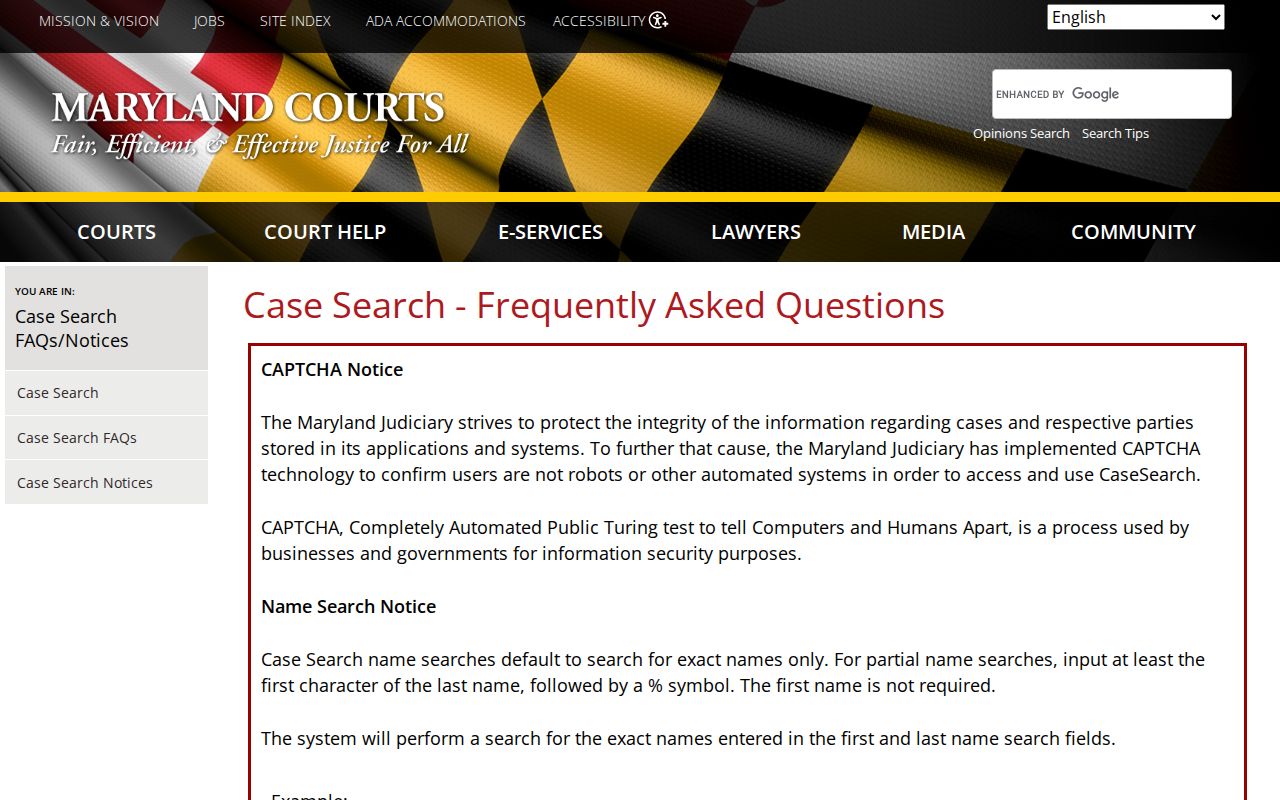
Maryland Judiciary Case Search is a solid name-checking tool. It is not a resident list, though. Party Search starts from an exact name. A trailing percent sign widens a surname or first-name search. It cannot sit in the middle or at the start. Trim a broad result with Baltimore County, court system, case type, and filing dates. Too wide a query returns only the first 500 results.
| Field | Type | Required | Search Use |
|---|---|---|---|
| Last name | Text | Party mode | Exact by default; a trailing % supports a partial search. |
| First and middle name | Text | No | Use the indexed spelling to separate namesake parties. |
| Person or company | Choice | Party mode | Select the party category before using the name fields. |
| County and court system | Dropdown | No | Choose Baltimore County and District or Circuit when known. |
| Case type and filing range | Dropdown and dates | No | A date range must be paired with a name. |
| Case number | Text | Case-number mode | Enter the full Maryland number when it is known. |
A public case result can include party names, city and state, sometimes an address, case number, court location, filing date, hearing dates, charge or case type, listed documents, event history, and a brief disposition. Remember, it is a docket summary rather than the full court record. Baltimore County Circuit civil data begins June 1, 1995 in Case Search. Criminal data begins in June 1984. District Court coverage starts in 1989 for civil matters and late 1991 for criminal, with some older or closed traffic matters handled through separate history. The Judiciary's Case Search FAQ lays out the current service rules and result context.
Take the displayed case number and court location to the local clerk. Ask there about a file, certified copy, archive retrieval, or courthouse terminal access. A kiosk can surface documents unavailable from home.
- Search the exact registered or indexed spelling first.
- Test a cautious trailing-percent variation only when needed.
- Record the case number, court, and filing date.
- Confirm the party with a second independent fact.
Middle River Voter Match Details
Maryland's voter tool exists for a named person. It checks a registration, polling place, districts, ballot status, or sample-ballot details. It demands first and last name, birth month, day, and year, a five-digit ZIP code, and a street number. The middle initial is optional. A Middle River name or ZIP alone will not run the search. The result is not a street-by-street roster and never reveals ballot selections.
A no-match does not close the door. The State Board suggests retrying with the spelling used at registration, a former ZIP after a move, or a former name after a change. Then contact the local board. Recent online or MVA changes can lag before appearing. The full voter-file product is restricted to qualifying electoral-process purposes. It cannot serve as a general personal directory. Protected records and Safe at Home substitute addresses may also limit what displays.
Note: Keep the voter search within a named person's own registration context, and lean on county election staff for troubleshooting.
Middle River Vital Record Boundaries
Vital records tie names to events, not to current addresses. They still anchor plenty of Middle River family searches. The Maryland Division of Vital Records holds current birth and death records. Marriage certificates from 2007 forward sit there too. A marriage before 2007 comes from the circuit court where it occurred. Older material leans on the Maryland Archives and genealogy collections for index leads. Keep the county separate from Baltimore City. A mixed-up jurisdiction will derail any result.
Maryland limits certificate access by relationship, purpose, and identification. Under State Government §9-1015, a birth record becomes unrestricted in Archives custody after 100 years. A death record becomes unrestricted after 10. Indexes and extracts fill gaps. A family-history question can often be answered without the modern certificate. Start with the event date and place. Then ask the proper custodian for only what the record rules allow.
The Maryland birth-certificate access page shows the official application route and who qualifies.
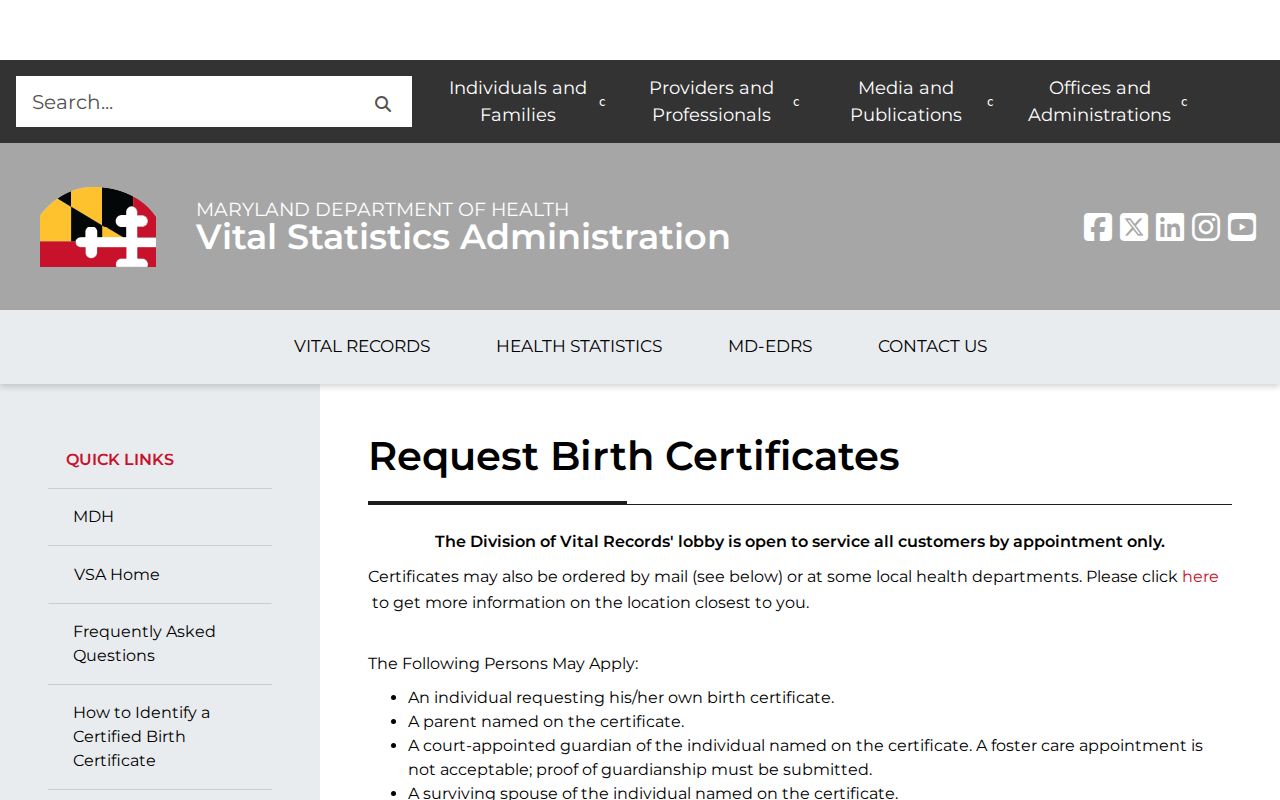
Qualifying requests go to DVR through the documented application route. The Baltimore County health department does not issue these certificates. Check current ordering costs on the Division of Vital Records fee schedule before choosing a certificate request.
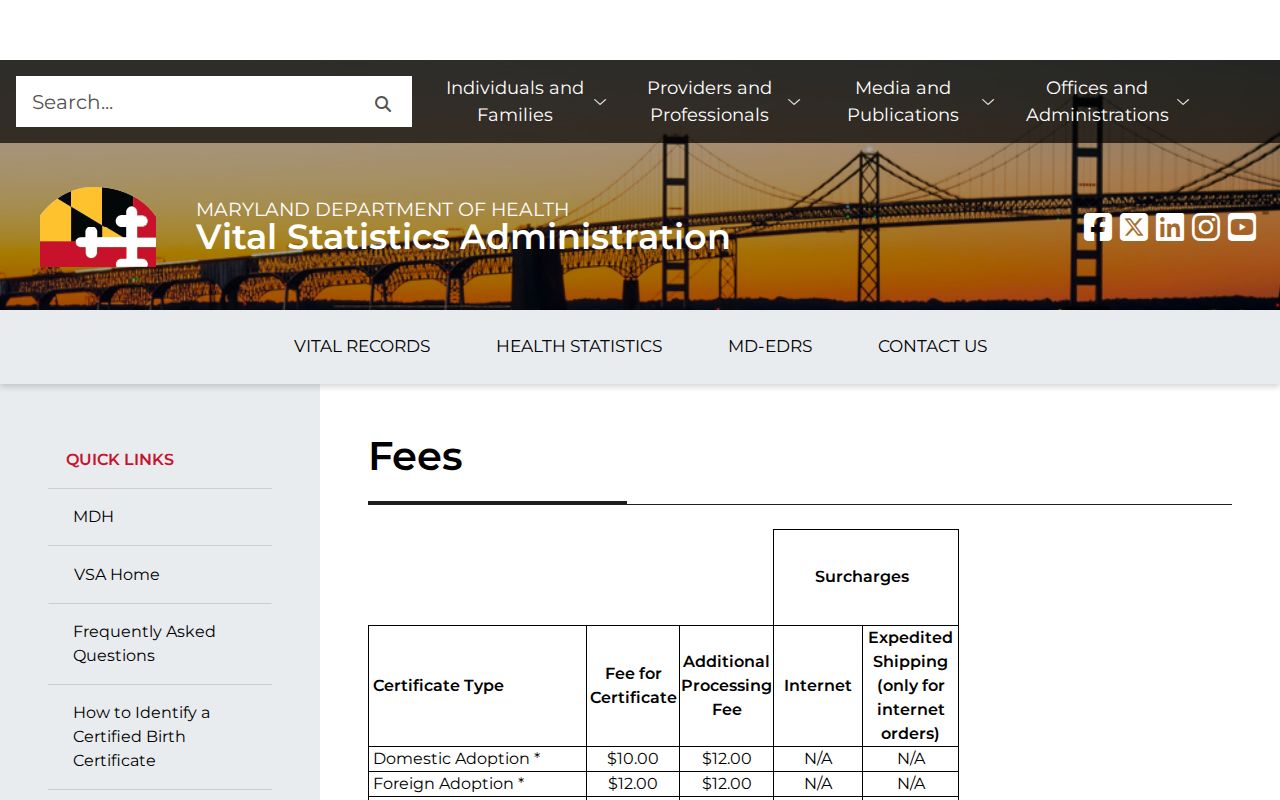
A birth or first death certificate runs $10. Marriage or divorce verification runs $12, plus separate online processing and delivery charges where offered.
Middle River Estate Search Leads
A broad name search can stall after a death. Estate records often work better. Estate Search and the Baltimore County Register of Wills can surface a decedent, estate number, status, type, county, and date. The file behind it may hold a personal representative, heirs, a last address, or property-related papers. Estate Search is separate from ordinary Case Search. A no-result in one system does not rule out the other.
Start with the decedent's surname and set Baltimore County. Narrow with status, date, type, or estate number. For longer forms or file details, call or visit the Register of Wills. Bring the estate number if you have one. The office sits in the County Courts Building at 401 Bosley Avenue in Towson. Weekday service hours run 8:30 a.m. to 4:30 p.m., with no walk-in customers after 4 p.m. Check any probate lead against a deed, obituary, or eligible vital record before connecting relatives.
The Baltimore County Register of Wills provides the estate-search and office route.
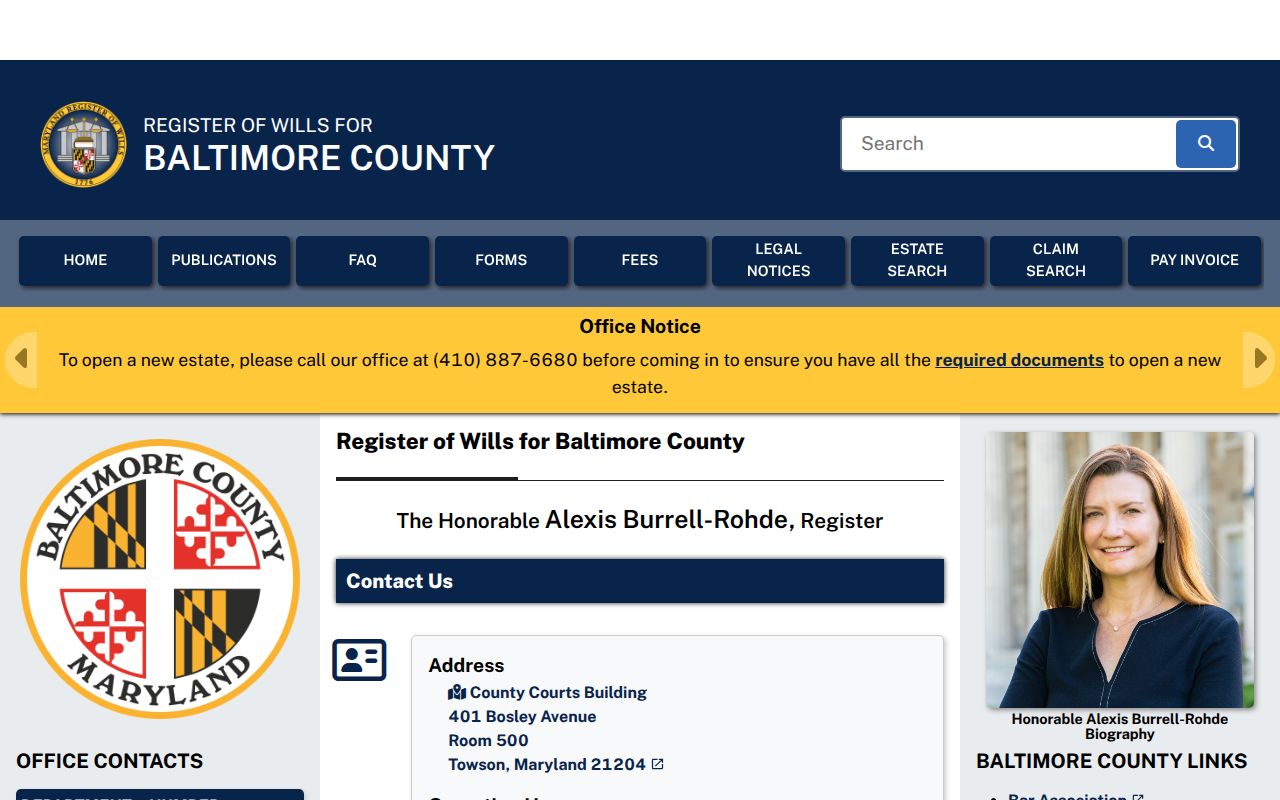
The index is only the first step. The county office remains the documented fallback for estate forms and additional information.
Verify a Middle River Resident
A careful Middle River resident lookup follows a repeatable check, not one broad query. Begin with the question. An address anchors to a parcel and deed reference. A case anchors to a docket number and clerk file. An event anchors to the right county and date. Then compare at least two independent details, such as a middle initial, spouse, former address, legal description, estate number, or event date.
- Write the full name and likely variants, including a former surname, middle initial, suffix, or common short first name.
- When an address is known, locate the parcel in SDAT and retain the owner line, account, legal description, and deed liber and folio.
- Use Maryland Land Records to compare the recorded transfer with the parcel, then use Case Search or Estate Search only for the relevant name and county.
- Take a case or estate number to the custodian, or use an eligible vital-record route when an official copy is actually needed.
- Docket
- A court’s running record of filings, hearings, and events in one case. A public docket summary may omit documents or restricted material.
- Index and image
- An index points to a record by names, dates, or numbers. An image is the scanned record itself, which may have separate access rules.
- Certified copy
- A copy issued and certified by the custodian for an official purpose. It is different from a search result or an informational screen view.
Middle River Lookup Fallbacks
An online no-match has many causes: spelling, a recent update, another system, or a restriction. Keep the failed search terms and date. For a court matter, call the clerk. You can also use the courthouse terminal with the case number. For deeds, turn to the Circuit Court Land Records office, Maryland Land Records, and Maryland Archives series. Use those when the online chain is incomplete. The Essex Branch of Baltimore County Public Library offers reference help and in-branch research databases. Try those for older addresses and family questions. The Historical Society of Baltimore County also keeps a research library and archives.
A disclosable record that is not online still has a route. Maryland's Public Information Act offers a written-request path through the correct custodian. The deadline is prompt. It never exceeds 30 days, and slower production requires a 10-working-day notice. Reasonable search, preparation, and reproduction costs may apply. A request cannot override a specific confidentiality rule. Target the document, and cite the record number or date already located.
Older city directories and obituary sources add family-history context. An old listing is not a current connection. Treat it as context only. In-person, phone, and email help are available. So is research-library help. Reach them through the BCPL database catalog and the Historical Society of Baltimore County.
Middle River Lookup Privacy Limits
A resident lookup has firm boundaries. DMV addresses, utility customers, delivery records, and unfiled household details are not public channels. Court materials can be sealed, shielded, or expunged. Maryland Safe at Home offers a substitute address. It forwards mail for eligible residents. Protected voter information may be withheld, so a missing result can reflect a privacy protection rather than an error to work around.
An official record can still be wrong. Save the exact URL, record number, and documentation. Contact the office that created it. Case Search routes correction notices to the originating court, while Maryland's Online Data Privacy Act grants access, correction, deletion, or opt-out rights with covered private controllers. That law cannot erase an official deed, docket, or certificate from its lawful custodian.
Lawful use. Use Middle River records for personal, family-history, estate, civic, or safety-related research that respects the law. Do not use information found here to stalk, harass, intimidate, or harm another person.