
Middle River City Directory Collections
Middle River is an unincorporated Baltimore County community. That means no separate municipal directory series exists for it. The useful shelf is regional. Baltimore County, Baltimore Suburban, Baltimore City, Polk's, telephone, and newspaper collections overlap the area differently. Each of them covers a different slice. A Baltimore City title cannot be assumed to cover every Middle River address. Check suburban volumes issue by issue too. The Maryland Archives holdings show what can be requested. BCPL microfilm and microfiche offer an in-person route whenever a volume is not digitized.
| Collection | Years | Where | Access |
|---|---|---|---|
| Baltimore County Directory | 1899 | FamilySearch Library catalog, film 1491072 / DGS 8932073 | Free catalog; image access depends on rights, account, or a FamilySearch Center |
| Polk's and Baltimore Suburban directories | 1955, 1956, 1957, 1958, 1959, 1961, 1963, 1964 | Maryland State Archives, Hornbake, Johns Hopkins, Enoch Pratt, and BCPL holdings | Check the individual volume and holding format |
| Baltimore City collection | 1752; 1796-1860; 1863-1930 | Maryland State Archives and BCPL microform holdings | Many volumes are digitized or searchable through 1923; coverage is not universal |
| Baltimore telephone directories | 1898-1959 | Maryland State Archives / Baltimore City Archives BMS21-3 | Microfilm series; later holdings need a catalog search |
The Maryland Archives city-directory collection names the institutional runs rather than promising any complete Middle River set. Its archive view is the sensible first stop before a library trip.
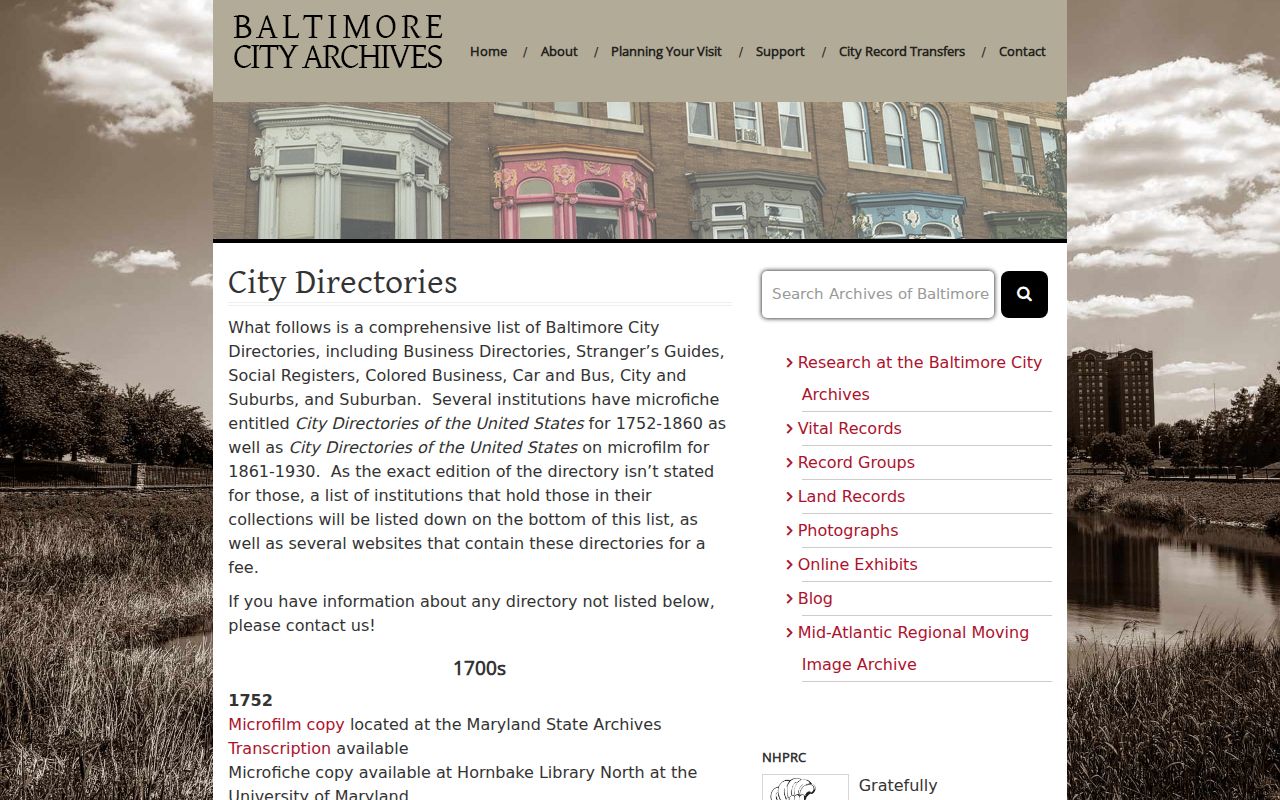
That collection view separates a known edition from a vague online search result. Record the title, year, and holding institution before treating any listing as evidence.
Middle River Suburban Year Runs
Baltimore Suburban is the title family most likely to pay off for Middle River. The Archives list includes Polk's City & Suburbs for 1955, Polk's editions for 1956, 1958, and 1961, Suburban editions for 1957 and 1959, and Baltimore Suburban for 1963. It also holds a Baltimore City volume for 1964. These are located editions. They do not prove each book indexed every community in the present CDP.
Longer Baltimore City runs carry real gaps. BRG29-10 lists 1912-1916, 1917, 1920-1921, 1924-1928, 1929-1930, 1936-1937, 1940, 1942, and 1961. Noted gaps fall from 1918-1919 and 1931-1935. A missing name can mean a skipped publication year, a different postal label, an abbreviated spelling, or a boarding-house treatment. It can also mean an address outside the volume's area. It does not, by itself, settle whether someone lived in Middle River.
The 1899 County Directory
The 1899 Baltimore County directory survives as a cataloged book of residents' names and post-office addresses. That makes it a strong tool for pinning an early shoreline or rural family to a place before suburban growth reshaped the map. The FamilySearch catalog record lists film 1491072 and DGS 8932073, though a free catalog entry does not mean the images themselves open freely.
Work with the county name and nearby post offices side by side. An old entry may read Essex, Baltimore County, Wilson Point, or some other local label where a modern search expects Middle River. Because land records here run back well before the modern place name, tract names, waterways, roads, and legal descriptions often serve as better index terms for an older family.
Reading a Middle River City Directory
An annual directory is a snapshot. It is not a deed, census, or official proof of residence. The Maryland Archives finding aid describes the kinds of material to expect in a page-carrying volume. It offers no browsable Middle River sample page. Copy exactly what the printed edition says. Keep the front matter with the citation, because abbreviations changed by publisher.
| Alphabetic name | Surname, given name, and initials as printed. Save spellings exactly, including a possible variant. |
|---|---|
| Household notation | A spouse or other household notation may appear where the publisher supplied it. |
| Occupation or business | A work or business clue may be printed, sometimes with an employer or classification. |
| Street address | House number and street, when the edition carried one. Compare it with the reverse section only if that volume has one. |
| Publisher notation | Residence, widow, junior, or ownership-style notation can occur, but its meaning must come from that volume's key. |
- Criss-cross directory
- The street-order portion of a directory. It reverses the name listing by leading with street and number, then the listed occupant or household.
- Householder index
- An alphabetical listing centered on the person or household rather than a parcel or street segment.
- Abbreviation key
- The publisher's explanation of shortened terms, usually in the front matter. Photograph or transcribe it before interpreting a mark.
Middle River's 1928 Criss-Cross Clue
The Archives marks 1928 as the first Baltimore directory with a criss-cross. That criss-cross is a street directory by address. It makes the volume a strong address-to-occupant tool whenever it reaches the right location. Earlier suburban books did not always carry a matching reverse section. And a Baltimore street listing did not always reach Middle River.
Archive detail. The 1928 Baltimore directory is the first city run the Archives calls a criss-cross directory by address. Check the volume's geographic coverage before using it for a Middle River house.
The BRG29-10 Archives finding aid is the source for that feature and its listed runs. Use it to determine which shelf or microfilm reel to request.
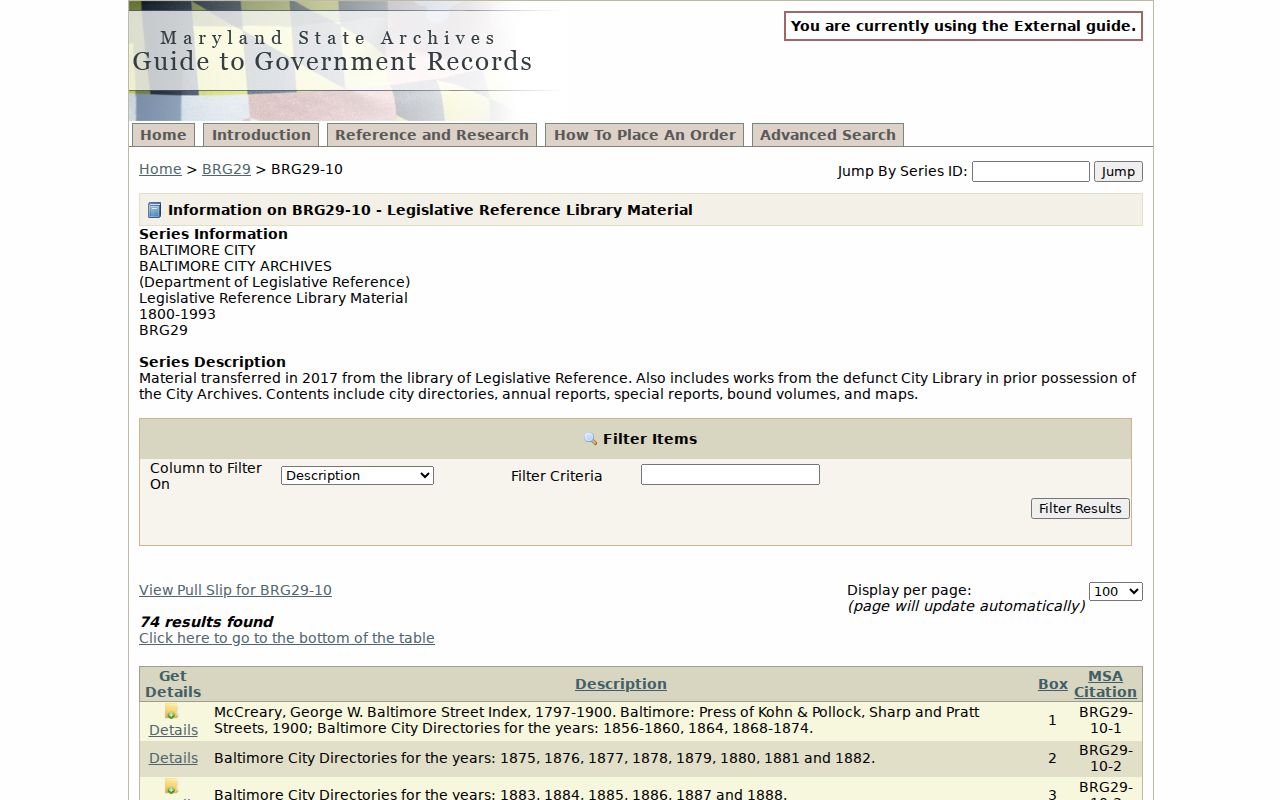
A reverse listing bridges a historic street and a name. It is not a complete account of every occupant. Pair it with the alphabetic section and another dated record.
Middle River Directory Library Access
Baltimore County Public Library serves Middle River through the Essex Branch. The branch sits at 1110 Eastern Boulevard, Essex, Maryland 21221, telephone 410-887-0295. BCPL describes its Maryland and local-history collections as including historical photographs, documents, and artifacts. Digital Maryland materials and government documents of local interest round out the holdings. The Archives directory inventory credits BCPL with city-directory microfiche for 1752-1860 and microfilm for 1861-1930.
At the reference desk, ask for the exact call number. Ask whether the volume sits in the branch or transfer storage. Also ask whether scanning or printing is allowed. BCPL's local-history collections also connect you with a librarian who can sort out city, county, and suburban coverage.
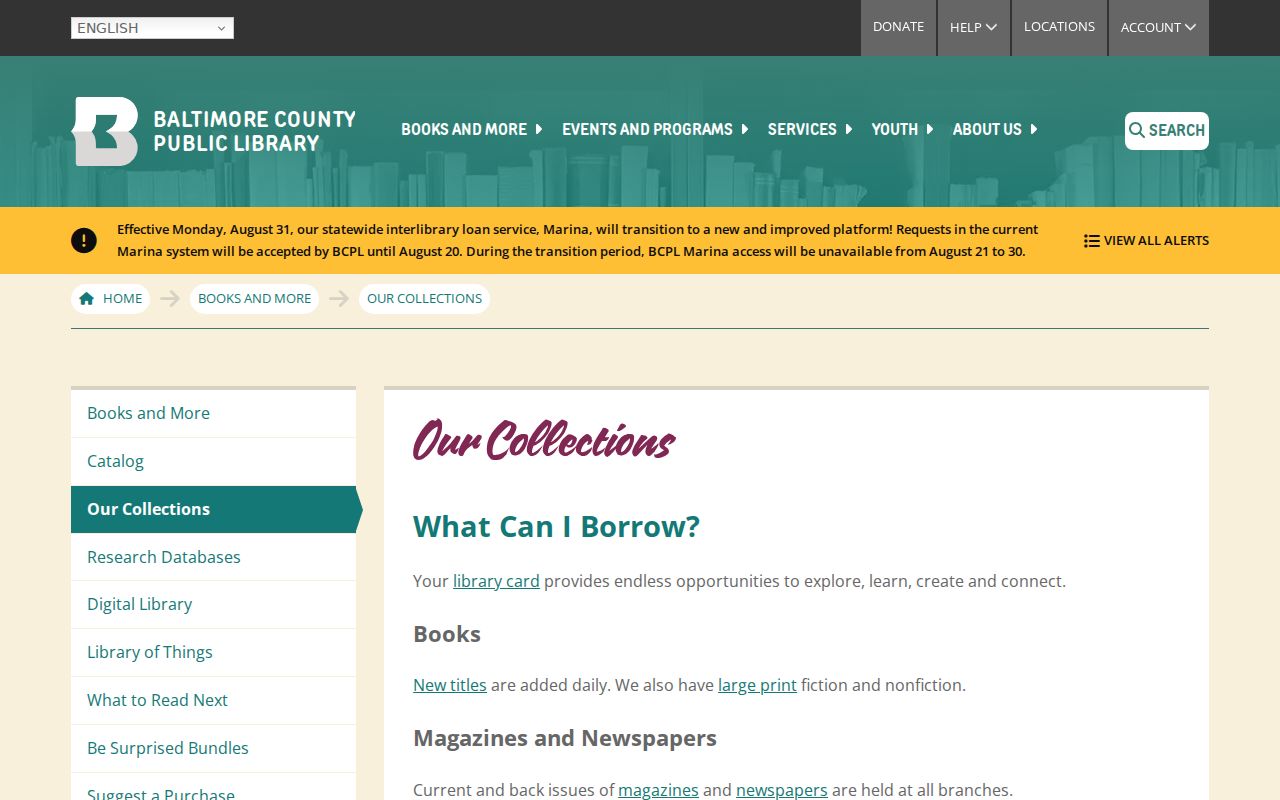
Library holdings open formats a web search never shows. A call number and a volume year keep the resident lookup trail reproducible.
Middle River Directory Companions
A residents directory opens more doors when you pair it with nearby local sources. BCPL provides Ancestry Library Edition inside the branch. It covers census records, directories, photographs, vital, military, passenger, and immigration material. Its database catalog also describes Baltimore Sun access. Plus it lists the Baltimore Afro-American full text collection for 1893-2010. The Archives newspaper guide places Middle River under Baltimore County coverage, which matters. A search limited to the city alone can miss county notices entirely.
The BCPL database directory lays out both the in-branch and database routes. Try Middle River, Essex, Wilson Point, Bowleys Quarters, street names, and surnames. Whenever something turns up, keep the find handy. Note the newspaper title, date, page, and image or citation.
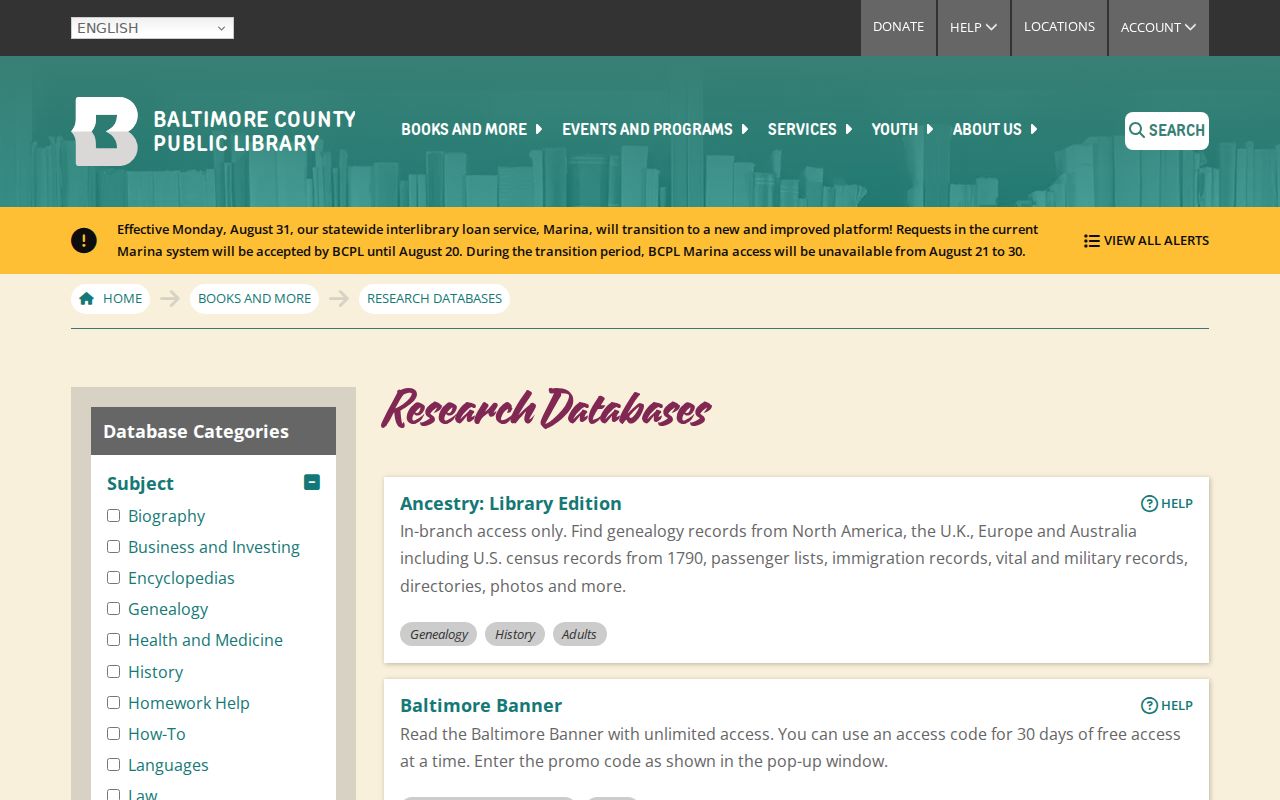
A database hit can stretch a directory date. A census record, obituary, or community notice answers a different question about the household than a residents directory entry does. The Maryland Archives newspaper guide is another route. Yearbooks help with former classmates. The Promethean series covers 1955-1956 and 1958-1966, though a yearbook address or photograph proves no current connection.
Newspaper and yearbook evidence should sit beside a dated directory entry. It never replaces one.
Trace Middle River Directory Households
Tracing a household across annual directories takes discipline. Keep dates and address forms together, and start from a known event before working both directions. A directory adds an address or occupation. A census adds age, birthplace, and household structure. Differences may reflect a move, a marriage, a death, a temporary arrangement, or simply the gap between an annual directory and an enumeration date.
- Choose a directory edition near the family event and record the exact printed spelling, initials, household notation, occupation, address, and any publisher mark.
- Check the edition immediately before and after it. Search both the alphabetic entry and the reverse street section when that edition contains one.
- Note every change in street number, street spelling, abbreviation, and household composition. Do not silently normalize a changed postal label.
- Pair the dated entry with the nearest available federal census, which may supply relationships, ages, birthplaces, and enumeration geography.
- Confirm major changes with deeds, vital records, obituaries, probate, or a Sanborn map. Middle River has a 1948 Sanborn sheet, while Essex has a 1932 atlas corrected to 1959.
A name that vanishes needs patience. Check the editions before and after. The person may have moved, died, been omitted, used a different spelling, or fallen under a nearby post-office label. Once the historical trail narrows, the Middle River street directory supports an address-led search of modern records.
Middle River Directory Access Alternatives
Some useful volumes never reach the web. Start with Maryland Archives guides and indexes, the FamilySearch catalog and collections, BCPL databases, census repositories, and digital-map channels. A restricted image needs a visit. Options include BCPL, a branch with local-history resources, the Maryland State Archives research room, the Historical Society of Baltimore County, or a FamilySearch Center or affiliate library. Each route has different strengths.
The Historical Society of Baltimore County keeps a county-wide research library, exhibits, and archives at the Almshouse, 9811 Van Buren Lane, Cockeysville. Its public contact information lists 410-666-1878 and info@hsobc.org. Ask specifically about Middle River, Essex, Wilson Point, and Bowleys Quarters. Churches, waterfront communities, farms, and industrial history also fall within its scope. Fees and turnaround times are not published. Confirm both directly before ordering any research work.
Note: archive custody and a catalog listing do not guarantee a viewable image, and library databases may require in-branch access or a current account.